Is Polymarket Legal in the US? Where Prediction Markets Stand in 2026
Polymarket US runs on a CFTC-registered exchange and names no restricted state; polymarket.com is closed to all Americans. Two of three federal appeals courts have sided with the states, and three Supreme Court petitions are pending. State by state, with California and Texas, to 27 September 2026.
Supreme Court petitions on sports event contracts
03
New Jersey (No. 26-299, filed 2 September 2026), Robinhood against Nevada (26-338, 10 September) and Crypto.com against Nevada (26-344, 11 September); the first response is due 14 October, and the Court's October Term opens on 5 October
- Federal appeals courts that have ruled for the states
- 02 of 3
- The Ninth Circuit for Nevada on 28 August and the Sixth for Ohio and Tennessee on 25 September 2026; the Third Circuit ruled for Kalshi against New Jersey on 6 April
- CFTC final rule on event contracts
- None yet
- Proposed 10 June 2026 with a public-interest test for terrorism, assassination, war, gaming and unlawful activity; comments closed 27 July. None adopted by 25 September
- Polymarket's 2022 CFTC penalty
- $0.01.4M
- 3 January 2022 order against Blockratize, Inc. for offering event contracts without a registered exchange; Polymarket US now runs on the QCX exchange it bought for $112 million in July 2025
The short answer
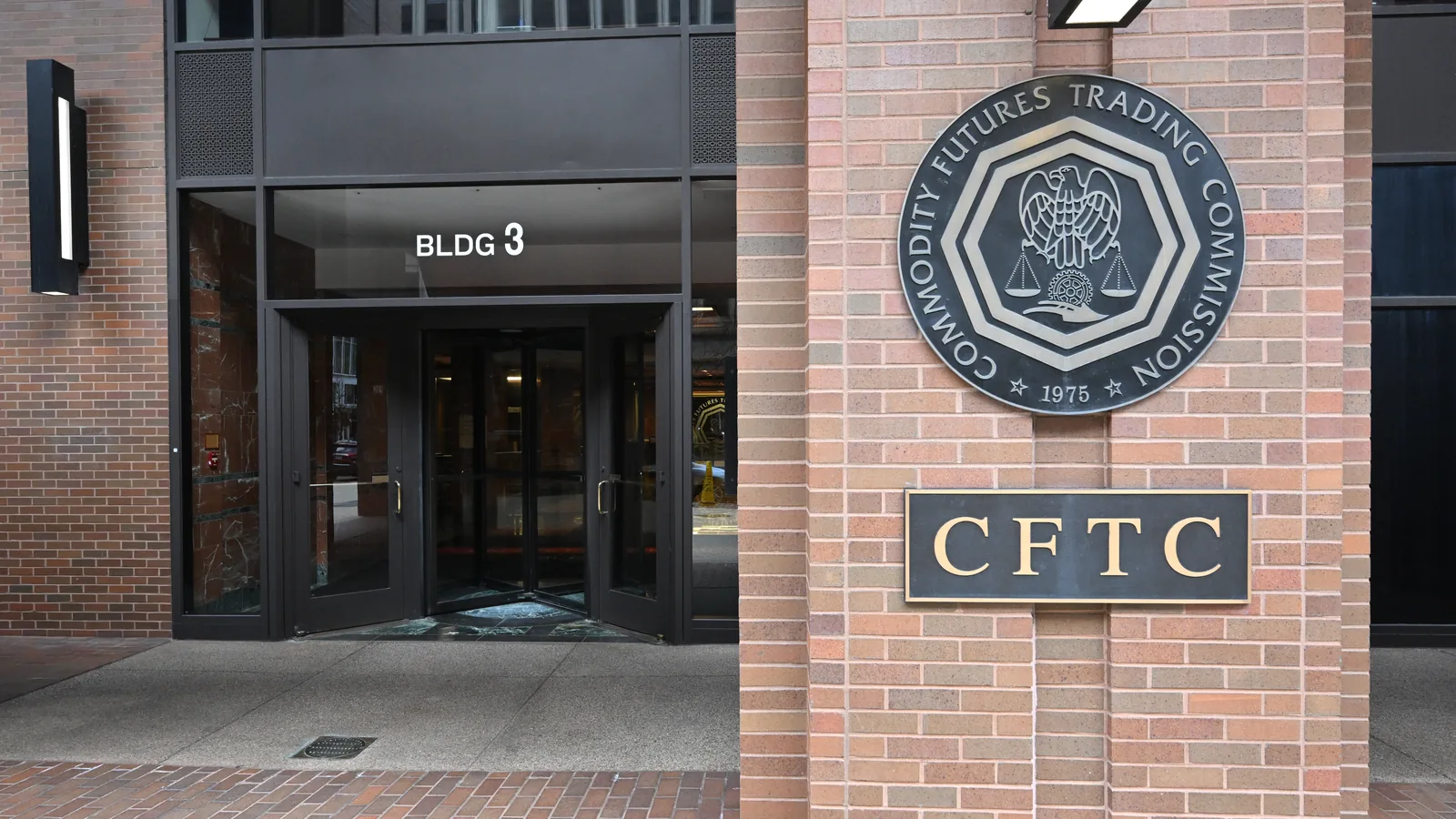
Two different exchanges carry the Polymarket name. Polymarket US runs on QCX, a CFTC-designated contract market that Polymarket bought for $112 million in July 2025, and it has been opening to American users since 3 December 2025, sports first. The original international exchange at polymarket.com is the one the CFTC fined $1.4 million in January 2022 for offering event contracts without registration, and it remains closed to U.S. traders; in April 2026 CoinDesk reported that the company was asking the Commission to let Americans back in.
Federal registration answers the federal question, not the state one. Whether a state can still treat a sports event contract as unlicensed betting has split the federal appeals courts: the Third Circuit sided with Kalshi against New Jersey on 6 April 2026, the Ninth Circuit with Nevada on 28 August and the Sixth Circuit with Ohio and Tennessee on 25 September. Three petitions now ask the Supreme Court to decide it; the Court's new term opens on 5 October and the first response is due on 14 October. States are not waiting: New York sued Polymarket US on 24 September.
This page records what courts and regulators have said up to 27 September 2026, including where things stand in California and Texas. Every case behind it, with its docket and latest entry, is in the prediction-market lawsuit tracker.
Polymarket US and polymarket.com are different venues
Most coverage uses "Polymarket" for both. They are separate exchanges with separate legal footing, fee schedules and market lists, and only one of them is open to U.S. residents.
| Polymarket US | polymarket.com (international) | |
|---|---|---|
| Legal footing | Polymarket USQCX LLC, a CFTC-designated contract market, acquired in July 2025; the CFTC approved intermediated U.S. access on 25 November 2025 | polymarket.com (international)Operated by Blockratize, Inc.; the CFTC's January 2022 order found its contracts were swaps offered without a registered exchange and required non-compliant markets to be wound down |
| Open to U.S. residents | Polymarket USYes; the app rolled out to its waitlist from 3 December 2025 | polymarket.com (international)No; in April 2026 the company was reported to be seeking CFTC approval to reopen it to U.S. traders |
| What it lists | Polymarket USSports at launch; by April 2026 a few politics and weather markets, per CoinDesk | polymarket.com (international)Elections, economics, geopolitics, crypto, sports, culture and more |
| Taker fee | Polymarket US0.06 × contracts × p × (1 − p), with a maker rebate, since 1 July 2026 | polymarket.com (international)0 to 0.07 × contracts × p × (1 − p) depending on category; geopolitics is fee-free and makers pay nothing |
Download table figures:CSVJSON with sources
Why the fight is about sports
State gaming regulators are not objecting to a contract on the Fed or an election. They object to contracts that settle on the result of a game, because in their view those are sports wagers that need a state licence and pay state tax. Kalshi's position is that a contract listed on a CFTC-designated exchange is a swap under the Commodity Exchange Act, which only the CFTC regulates.
The court map, as of 27 September 2026
Kalshi is the party in most of these cases because it launched sports contracts nationwide first; the same arguments reach Polymarket US and any other CFTC-registered venue that lists them. The table lists the decisions and filings that set the current map. Below the appeals courts, the United States and the CFTC have sued eight states since 2 April 2026, and judges granted injunctions in Arizona on 5 May and Minnesota on 27 July and refused one in Wisconsin on 28 July. All 49 cases Vultax follows, from these rulings to class actions and two insider-trading prosecutions, are in the prediction-market lawsuit tracker.
| Court | Date | State | What it held or asks | Outcome |
|---|---|---|---|---|
| U.S. Court of Appeals, Third Circuit | Date6 Apr 2026 | StateNew Jersey | What it held or asksKalshi's sports event contracts are swaps under the Commodity Exchange Act; the injunction barring New Jersey from enforcing its gambling laws against Kalshi stands | OutcomeFor Kalshi |
| U.S. Court of Appeals, Ninth Circuit | Date28 Aug 2026 | StateNevada | What it held or asksKalshi had not shown that federal law likely pre-empts Nevada gaming law, so the district court was right to dissolve its preliminary injunction (KalshiEX v. Assad, No. 25-7516); Kalshi has asked for rehearing by the full court (reported) | OutcomeFor the state |
| U.S. Court of Appeals, Ninth Circuit | Date16 Sep 2026 | StateCalifornia (tribal land) | What it held or asksCalifornia tribes are likely to win under the Indian Gaming Regulatory Act: sports contracts entered from their land are Class III gaming, outside the CFTC's exclusive jurisdiction; sent back for the injunction decision (Blue Lake Rancheria v. Kalshi, No. 25-7504) | OutcomeFor the tribes |
| Suffolk County Superior Court | Date20 Jan 2026 | StateMassachusetts | What it held or asksPreliminary injunction against sports contracts offered to residents without a licence (reported) | OutcomeFor the state |
| U.S. District Court, Southern District of Ohio | Date9 Mar 2026 | StateOhio | What it held or asksKalshi's motion for a preliminary injunction against the Ohio Casino Control Commission denied (date reported); affirmed by the Sixth Circuit on 25 September 2026 | OutcomeFor the state |
| U.S. District Court, Middle District of Tennessee | DateFeb 2026 | StateTennessee | What it held or asksGranted Kalshi a preliminary injunction on pre-emption grounds (date reported); vacated by the Sixth Circuit on 25 September 2026 | OutcomeFor Kalshi, vacated |
| U.S. Court of Appeals, Sixth Circuit | Date25 Sep 2026 | StateOhio and Tennessee | What it held or asksKalshi has not shown its sports event contracts are swaps under the CFTC's exclusive jurisdiction, and in the alternative federal law does not pre-empt the states' gambling laws: Ohio's denial of a preliminary injunction affirmed, Tennessee's grant vacated (KalshiEX v. Schuler and KalshiEX v. Orgel, Nos. 26-3196 and 26-5235) | OutcomeFor the states |
| U.S. Court of Appeals, Fourth Circuit | DateArgued 7 May 2026 | StateMaryland | What it held or asksNo decision; on 25 September Kalshi told the court of a forthcoming CFTC regulation | OutcomePending |
| Supreme Court of the United States | DateFiled 2 Sep 2026 | StateNew Jersey | What it held or asksFlaherty v. KalshiEX, No. 26-299: did Dodd-Frank stop states regulating sports bets on CFTC-registered markets? Kalshi's response is due 9 November | OutcomeNot yet distributed |
| Supreme Court of the United States | DateFiled 10 Sep 2026 | StateNevada | What it held or asksRobinhood Derivatives v. Dreitzer, No. 26-338: does the Commodity Exchange Act pre-empt state gaming law for sports contracts? Nevada's response is due 14 October | OutcomeNot yet distributed |
| Supreme Court of the United States | DateFiled 11 Sep 2026 | StateNevada | What it held or asksCrypto.com's exchange v. Nevada, No. 26-344, on the same question; Nevada's response is due 15 October | OutcomeNot yet distributed |
Download table figures:CSVJSON with sources
- Where the split comes from - the Third Circuit read the Commodity Exchange Act as covering sports contracts on a registered exchange; the Ninth and Sixth Circuits read state gaming law as still applying to them.
- Why the Supreme Court matters - a split between federal circuits is the usual reason the Court takes a case. Its October Term opens on 5 October; the three petitions had not been distributed for a conference by 25 September, so none can be taken up at the 28 September opening conference. Until the Court acts, the same contract can be lawful to offer in one state and restricted in the next.
What the CFTC is doing
The Commission's position is that federal registration governs. On 6 February 2026 it withdrew a 2024 proposal that would have barred some event contracts, saying it was doing so "to reconsider them in light of various forms of state regulatory actions and litigation concerning the Commission's exclusive jurisdiction over event contract derivatives." On 12 March it published an advance notice of proposed rulemaking on prediction markets.
On 10 June 2026 it proposed a replacement: a three-step test that asks whether a contract is an event contract in an excluded commodity, whether it involves terrorism, assassination, war, gaming or unlawful activity, and whether it is contrary to the public interest. Comments closed on 27 July, according to Holland & Knight; None had been adopted by 25 September. Chairman Michael Selig, sworn in on 22 December 2025, said the Commission "will protect the integrity of our regulated markets without standing in the way of responsible innovation."
Gaming is one of the listed activities. A final rule could therefore leave the Commission deciding for itself which sports contracts are in the public interest, which would narrow the state fight without ending it.
On 22 September the Commission's Division of Market Oversight warned in a staff advisory that "mention" contracts, which settle on whether someone says a word, carry a heightened risk of manipulation. No CFTC action naming Polymarket was announced in September; CNBC reported in June that the Commission was investigating the company.
State actions aimed at Polymarket
Polymarket's U.S. return put it into the same fight. The actions below run from January to September 2026; the Illinois, Missouri and New York documents are the states' own, and Nevada's dates are from the court record.
- Illinois - the Illinois Gaming Board sent Polymarket a cease-and-desist letter dated 27 January 2026, alleging unlicensed sports wagering.
- Tennessee - the state's Sports Wagering Council sent cease-and-desist letters to Kalshi, Polymarket and Crypto.com, which The Block reported as Polymarket's first at state level.
- Nevada - the state's Gaming Control Board sued Polymarket's companies on 16 January 2026 and won a 14-day temporary restraining order in state court on 29 January; a federal court sent the case back to state court on 2 March, and the Ninth Circuit refused Polymarket a stay on 21 May.
- Wisconsin and Kentucky - both states sued Polymarket US in state court; Polymarket US removed the cases to federal court on 24 April and 18 June 2026, and the states' motions to send them back are pending.
- Michigan - Polymarket US sued Michigan officials to stop enforcement of state gambling law; a federal judge refused it a preliminary injunction on 17 June 2026, and the appeal is being briefed.
- New Mexico - Polymarket went on the offensive and sued the state in federal court on 2 July 2026.
- Minnesota - a federal judge barred Minnesota on 27 July 2026 from enforcing its prediction-market law against CFTC-registered exchanges, in suits brought by the United States and the CFTC, Kalshi and Polymarket US.
- Baltimore - the City sued Polymarket US and its parent on 13 August 2026 under its consumer-protection ordinance; the case was removed to federal court on 17 August.
- Missouri - Attorney General Catherine Hanaway sent cease-and-desist letters in mid-September 2026 to Polymarket, Kalshi, Crypto.com, Novig, Underdog and Robinhood, calling their sports contracts unlicensed sports wagering.
- New York - on 24 September 2026 Attorney General Letitia James and Governor Kathy Hochul sued QCX LLC, which trades as Polymarket US, alleging an illegal gambling operation that let 18- to 20-year-olds bet on sports. Polymarket sued New York officials in Manhattan federal court the same day, calling the claim "squarely foreclosed by federal law", Insurance Journal reported.
Is Polymarket legal in California?
polymarket.com is closed to Californians, as it is to every U.S. user: Polymarket's list of restricted countries names the United States as a whole. Polymarket US names no restricted state in its app terms, and guides published by CBS Sports and Sports Illustrated on 24 September 2026 describe it and Kalshi as open to California residents, sports contracts included. Sports betting itself is not legal in California; the Ninth Circuit opened its 16 September opinion by saying so.
The one California ruling so far is about tribal land. In Blue Lake Rancheria v. Kalshi, filed in the Northern District of California in July 2025 (No. 3:25-cv-06162), California tribes argued that Kalshi's sports contracts are illegal Class III gaming when entered from their reservations. The district court refused an injunction in November 2025. On 16 September 2026 a unanimous Ninth Circuit panel (No. 25-7504) held that the tribes are likely to win under the Indian Gaming Regulatory Act, that the Commodity Exchange Act's exclusive jurisdiction does not reach those contracts, and sent the case back for the injunction decision. Bloomberg Law reported that Kalshi told the court on 24 September it had switched off its markets on three tribes' lands.
The state has joined the fight in court without suing anyone. Attorney General Rob Bonta signed the attorneys general's brief supporting the tribes, and in June 2026 joined a 37-state brief backing Ohio against Kalshi, which his office called California's seventh such filing. In the legislature, AB 2617 would bar offering prediction-market wagering to minors and has sat in committee since 17 March 2026; AB 1840 would bar some officials, employees and lobbyists from trading prediction-market contracts on material nonpublic information. Governor Gavin Newsom signed an executive order on 27 March 2026 barring his appointees from using nonpublic state information to profit on prediction markets.
Is Polymarket legal in Texas?
Texas has no legal sports betting, and the Texas Tribune notes that its Penal Code makes election betting illegal. Even so, no Texas restriction on Polymarket US or Kalshi has been published: polymarket.com is closed to Texans as to all U.S. users, Polymarket US names no restricted state, and Covers and the Texas Tribune describe both apps taking Texas customers, sports included.
The state has not gone to court. Attorney General Ken Paxton is not on the attorneys general's brief in the California tribal case, and CNBC reported that Texas was one of five states that did not sign the attorneys general's July letter telling the CFTC it lacks authority over sports contracts. The Texas Lottery Commission, sometimes named as the regulator, no longer exists: SB 3070 dissolved it on 1 September 2025 and moved its work to the Department of Licensing and Regulation.
The legislature is where Texas is moving. In March 2026 Lieutenant Governor Dan Patrick gave the Senate State Affairs Committee an interim charge, "Closing Gambling Loopholes", to study prediction markets and recommend action. The committee, chaired by Senator Bryan Hughes, heard Kalshi, the American Gaming Association, the Kickapoo Traditional Tribe of Texas and others on 15 September 2026; the next regular session opens in January 2027.
What this means if you live in the U.S.
A summary of where things stand, drawn from the decisions above.
- Federally registered venues operate under federal law - Kalshi and Polymarket US are CFTC-designated contract markets, and the Commission's chairman has argued that federal registration should govern nationally.
- polymarket.com is not open to U.S. persons - that follows from the 2022 order and Polymarket's own restrictions, which name the whole United States; Vultax found no report that the CFTC had granted the company's April request to reopen it.
- Sports contracts depend on your state - Nevada won at the Ninth Circuit and Ohio and Tennessee at the Sixth, a Washington court has ordered Kalshi to stop offering them there, and Massachusetts won an injunction; New York, Wisconsin and Kentucky are suing Polymarket US; on three California tribes' lands Kalshi has switched its markets off; elsewhere, including the rest of California and Texas, they are offered while the cases continue.
- Other contracts are less contested - Fed, economic and election contracts are not what the state cases are about, though the CFTC's pending rule could still limit some event categories.
- Nothing is settled until the Supreme Court acts - three petitions are pending and none had been scheduled for a conference by 25 September; if the Court takes a case, a decision would come no earlier than its 2026–27 term.
Method and limits
Legal facts were read on 12, 25 and 27 September 2026 from court opinions and dockets (the Supreme Court and the Ninth Circuit), state attorney-general, governor and legislature pages, the CFTC's orders and press releases, company announcements and documentation, law-firm client alerts and press reports. Items marked reported, or attributed to a publication, rest on press coverage that could not be checked against the court record from our environment; several court and venue websites block automated reading.
The court rows were checked on 27 September 2026 against the court's own documents and dockets, as set out in the lawsuit tracker; rows still marked reported rest on press coverage.
Challenge a line at [email protected]; material changes are logged in the changelog.
Downloads contain the published study figures. Changing market widgets are separate. Use Vultax research with an AI assistant. Press note.
Questions this page answers
- Is Polymarket legal in the US?
- Polymarket US, which runs on the CFTC-registered QCX exchange, operates under federal law and has been opening to U.S. users since December 2025. The international polymarket.com is not open to U.S. traders. Whether a state may restrict sports contracts on either kind of venue is being decided in court.
- Why can't Americans use polymarket.com?
- In January 2022 the CFTC fined its operator $1.4 million for offering event contracts without a registered exchange and ordered non-compliant markets wound down. Polymarket's U.S. business now runs through a separate registered exchange.
- Is Kalshi legal in every state?
- Kalshi is a CFTC-designated contract market, but the Sixth Circuit ruled for Ohio and Tennessee on 25 September 2026 and the Ninth Circuit for Nevada on 28 August; Washington and Massachusetts courts have granted injunctions against it; California tribes won a Ninth Circuit ruling on their land; and Missouri has ordered it to stop taking sports contracts. New Jersey lost at the Third Circuit and has asked the Supreme Court to hear the case.
- Has the Supreme Court ruled on prediction markets?
- No. Three petitions are pending: New Jersey's (No. 26-299, filed 2 September 2026) and two from Nevada cases brought by Robinhood and Crypto.com (Nos. 26-338 and 26-344). The first response is due on 14 October 2026, and Kalshi's response to New Jersey's petition on 9 November; the Court's term opens on 5 October.
- Is Polymarket legal in California?
- polymarket.com is closed to all U.S. users, Californians included. Polymarket US, the CFTC-registered app, names no restricted state and is described by press guides as open to California residents; sports betting itself is illegal in California, and state officials have backed the tribes and other states against prediction markets in court.
- Is Polymarket legal in Texas?
- polymarket.com is closed to Texans. No Texas restriction on Polymarket US has been published, the attorney general has not sued, and a Senate committee heard testimony on prediction markets on 15 September 2026 ahead of the January 2027 session.
- Is Kalshi legal in California?
- Kalshi is a CFTC-registered exchange that takes California customers, but on 16 September 2026 the Ninth Circuit held that California tribes are likely to win their case against its sports contracts on tribal land, and Kalshi reported switching its markets off on three tribes' lands.
Revision notes
This page is kept current. Each entry records what changed and when; the live figures above refresh on their own.
- Added the Sixth Circuit's 25 September ruling for Ohio and Tennessee, suits against Polymarket US by Wisconsin, Kentucky and Baltimore, and Polymarket US's cases in Michigan and Minnesota; the Nevada restraining order is dated 29 January 2026, from the court record.
- Added California and Texas, the Ninth Circuit's 16 September tribal-land ruling, three pending Supreme Court petitions, New York's suit against Polymarket US, Missouri's cease-and-desist letters and the CFTC's March notice and September advisory. The venue-volume reading was withdrawn.
Sources and evidence
- CFTC — Order against Blockratize, Inc. d/b/a Polymarket (3 Jan 2022)
$1.4 million civil penalty; contracts found to be swaps offered without a registered exchange; wind-down of non-compliant markets
- Polymarket — acquisition of CFTC-licensed exchange and clearinghouse QCEX (21 Jul 2025)
$112 million; QCX LLC and QC Clearing LLC
- Polymarket — CFTC approval of amended order of designation (25 Nov 2025)
Intermediated U.S. market access
- PYMNTS — Polymarket begins rolling out U.S. app (4 Dec 2025)
Waitlist rollout from 3 December, launching with sports
- CoinDesk — Polymarket seeks CFTC approval to reopen main exchange to U.S. traders (28 Apr 2026)
Main exchange still off-limits to U.S. traders; U.S. app sports-first
- Polymarket US — fees
Taker theta 0.06, maker rebate theta −0.0125, effective 1 July 2026; read 2026-09-12
- Polymarket — trading fees
Category rates 0 to 0.07; makers pay nothing; read 2026-09-12
- Holland & Knight — Federal appeals court on CFTC jurisdiction over sports event contracts (Apr 2026)
KalshiEX LLC v. Flaherty, Third Circuit, 6 April 2026
- American Banker — Kalshi ruling favoring states tees up Supreme Court fight (Aug 2026)
Ninth Circuit, 28 August 2026, for Nevada
- AP via Hawaii Tribune-Herald — New Jersey takes fight over Kalshi's prediction market to U.S. Supreme Court (3 Sep 2026)
Petition filed 2 September 2026
- Boston Globe — Kalshi sports betting injunction in Massachusetts (21 Jan 2026)
Suffolk Superior Court preliminary injunction; reported
- Justia — KalshiEX LLC v. Schuler, S.D. Ohio, No. 2:25-cv-01165
Preliminary injunction denied, 9 March 2026; reported
- National Law Review — Kalshi's Sixth Circuit battle (Aug 2026)
Tennessee and Ohio rulings consolidated; argued 30 July 2026
- Covers — Maryland appeals court hearing on Kalshi (May 2026)
Fourth Circuit argument; no decision found by 12 September
- CFTC — Withdrawal of proposed event-contract rules (6 Feb 2026)
Withdrawn to reconsider in light of state actions and litigation
- CFTC — Proposed public-interest framework for event contracts (10 Jun 2026)
Three-step test; terrorism, assassination, war, gaming, unlawful activity
- Holland & Knight — CFTC proposes comprehensive framework for public interest review (Jun 2026)
Comment deadline 27 July 2026
- CFTC — Chairman Michael S. Selig
Sworn in 22 December 2025
- Illinois Gaming Board — cease-and-desist letter to Polymarket (27 Jan 2026)
Alleged unlicensed sports wagering
- The Block — Polymarket faces first state-level cease-and-desist from Tennessee
Kalshi, Polymarket and Crypto.com; reported
- SBC Americas — Nevada judge initial ban on Polymarket (2 Feb 2026)
Temporary ban; reported
- SBC Americas — Polymarket sues New Mexico (2 Jul 2026)
Federal lawsuit; reported
- Polymarket — geographic restrictions
The United States is on the list of restricted countries; read 2026-09-25
- U.S. Court of Appeals, Ninth Circuit — Blue Lake Rancheria v. Kalshi, No. 25-7504 (16 Sep 2026)
Tribes likely to prevail under IGRA; remanded
- U.S. Court of Appeals, Ninth Circuit — KalshiEX v. Assad, No. 25-7516 (28 Aug 2026)
Dissolution of Kalshi's preliminary injunction upheld
- Supreme Court docket — Flaherty v. KalshiEX, No. 26-299
Filed 2 Sep 2026; response due 9 Nov 2026
- Supreme Court docket — Robinhood Derivatives v. Dreitzer, No. 26-338
Filed 10 Sep 2026; response due 14 Oct 2026
- Supreme Court docket — North American Derivatives Exchange v. Nevada, No. 26-344
Filed 11 Sep 2026; response due 15 Oct 2026
- Supreme Court — October Term 2026 calendar
Opening conference 28 September 2026
- New York Attorney General — lawsuit against Polymarket US (24 Sep 2026)
QCX LLC d/b/a Polymarket US; alleged illegal gambling operation
- Insurance Journal (AP) — Polymarket sues New York officials (24 Sep 2026)
Federal suit in Manhattan; reported
- Missouri Attorney General — cease-and-desist to prediction markets (Sep 2026)
Polymarket, Kalshi, Crypto.com, Novig, Underdog, Robinhood
- California Attorney General — coalition defending state gambling laws (12 Jun 2026)
37-attorney-general amicus brief in KalshiEX v. Schuler
- California Legislature — AB 2617 status
Re-referred to the Governmental Organization Committee 17 March 2026
- California Legislature — AB 1840 text
Prediction-market trading on material nonpublic information by officials
- Governor of California — executive order on insider betting (27 Mar 2026)
Appointees barred from profiting on nonpublic state information
- Bloomberg Law — Kalshi takes its prediction markets out of three tribes' lands (24 Sep 2026)
Reported filing in the Blue Lake case
- CBS Sports — Is Polymarket legal in California? (24 Sep 2026)
Availability guide
- Texas Senate — Committee on State Affairs, interim charges
"Closing Gambling Loopholes"
- Texas Legislature — State Affairs hearing and witness list (15 Sep 2026)
Kalshi, American Gaming Association, Kickapoo Traditional Tribe of Texas and others
- Texas Tribune — Texas and prediction markets (1 May 2026)
Attorney general's office; election-betting law
- Covers — Texas lawmakers hear prediction-market arguments (15 Sep 2026)
Hearing coverage; availability in Texas
- CNBC — 44 states say the CFTC has no authority over sports prediction markets (28 Jul 2026)
Texas among five states that did not sign
- Texas Lottery Commission — move to TDLR (1 Sep 2025)
SB 3070 dissolved the commission
- CFTC — advance notice of proposed rulemaking on prediction markets (12 Mar 2026)
Release 9194-26
- CFTC — staff advisory on mention-market contracts (22 Sep 2026)
Heightened manipulation risk
- PYMNTS — Polymarket faces CFTC probe (28 Jun 2026)
Summarises CNBC's 26 June report
- U.S. Court of Appeals, Sixth Circuit — KalshiEX v. Schuler and KalshiEX v. Orgel, Nos. 26-3196 and 26-5235 (25 Sep 2026)
Ohio's denial of an injunction affirmed, Tennessee's grant vacated; recommended for publication
- U.S. Court of Appeals, Third Circuit — KalshiEX v. Flaherty, No. 25-1922 (6 Apr 2026)
Precedential opinion upholding Kalshi's preliminary injunction against New Jersey
- U.S. Court of Appeals, Fourth Circuit — KalshiEX v. Martin, No. 25-1892, docket
Argued 7 May 2026; undecided at 27 September
- U.S. District Court, District of Nevada — remand order in Nevada v. Blockratize (2 Mar 2026)
Recites the 16 January suit and the 29 January state-court restraining order
- U.S. District Court, District of Minnesota — order granting preliminary injunctions (27 Jul 2026)
In the CFTC's, Kalshi's and Polymarket US's cases
- U.S. District Court, Western District of Michigan — QCX v. Nessel, order denying a preliminary injunction (17 Jun 2026)
Appeal in the Sixth Circuit, No. 26-1552
- Wisconsin v. QCX LLC, W.D. Wis. 3:26-cv-00375, docket
Removed 24 April 2026; checked against the docket index only
- Kentucky v. QCX LLC, E.D. Ky. 3:26-cv-00047, docket
Removed 18 June 2026; checked against the docket index only
- City of Baltimore v. QCX LLC — complaint (13 Aug 2026)
Consumer Protection Ordinance claims; removed to D. Md. 1:26-cv-03253
- King County Superior Court — amended order granting Washington a preliminary injunction against Kalshi (12 Aug 2026)
Sports, election and other listed contracts barred in Washington
- Vultax: Prediction market lawsuit tracker
All 49 cases, each checked against the court record on 27 September 2026
Describes court decisions, regulatory actions and venue documents up to 27 September 2026; complaints are allegations, most rulings are on preliminary relief, and items marked reported rest on press coverage. Nothing here is legal or financial advice.
Watch this measurement live in Vultax.
Live Polymarket markets, topics and traders in one screen, with Vultax analytics beside every price.
New studies, by email.
Measured, sourced, and sent once per study. No digests, no promotions.
Continue reading
Prediction Market Lawsuit Tracker: 49 Cases, Checked Against the Court Record
Every court case Vultax follows over sports and event contracts, from Supreme Court petitions to class actions and two insider-trading prosecutions: 49 in all, each checked against the court's own documents or docket on 27 September 2026, with the next deadlines first.
Lithuania Is Evaluating Other Prediction Markets After Blocking Polymarket
Lithuania's Gaming Control Authority told Vultax on 30 September that Polymarket's operator has not responded to or appealed the block, and that it is now evaluating other prediction-market websites. The block rests on a court ruling of 24 August 2026.
We Tested Polymarket Prices Against 6,776 Resolved Markets. Here's Where They Bend.
Original Vultax research: in an experimental test, a calibrated fair-value model beat raw Polymarket prices by ~9.6% on held-out Brier score. Where the favorite-longshot effect lives, what the model can honestly flag, and why it still isn't a trading edge.